02 / Live · 8 CEU hours · PTs, PTAs, ATCs, DCs

Post-Op Knee Rehab with BFR.

ACL reconstruction, MPFL, meniscus, and total knee. Quad preservation in the early window, progressive loading through mid-rehab, and criteria-based return. Over half the day is hands-on.

Dates & Registration All Courses
01 / The course

What you leave able to do.

The post-operative knee loses the quadriceps before it loses anything else. This course is the system for keeping it: structured screening built on validated VTE instruments, limb occlusion pressure measured not guessed, BFR and NMES in the early window, loading progressed on criteria through mid-rehab, and a return battery you can defend.

No prior BFR training is required. BFR Fundamentals is the natural first step, but the screening and pressure skills are taught and checked off here as well.

You leave able to
  • Screen and dose BFR for a post-op knee from the first week, with the instrument matched to the surgical status
  • Measure limb occlusion pressure and prescribe pressure as a percentage of it
  • Integrate NMES and BFR into early-phase care alongside effusion and extension management
  • Progress loading through mid-rehab on criteria, not the calendar
  • Run and interpret a return test battery, and state the limits of limb symmetry indexes
  • Document screening, treatment and return decisions defensibly
Who it is for
  • Anyone managing a post-op caseload
  • Clinics standardizing knee rehab
  • Athletic trainers and coaches who get the athlete back
  • Physicians who want to know what their rehab team should be doing
the part people remember is the afternoon:
cuffs on, numbers on the board, no slides.
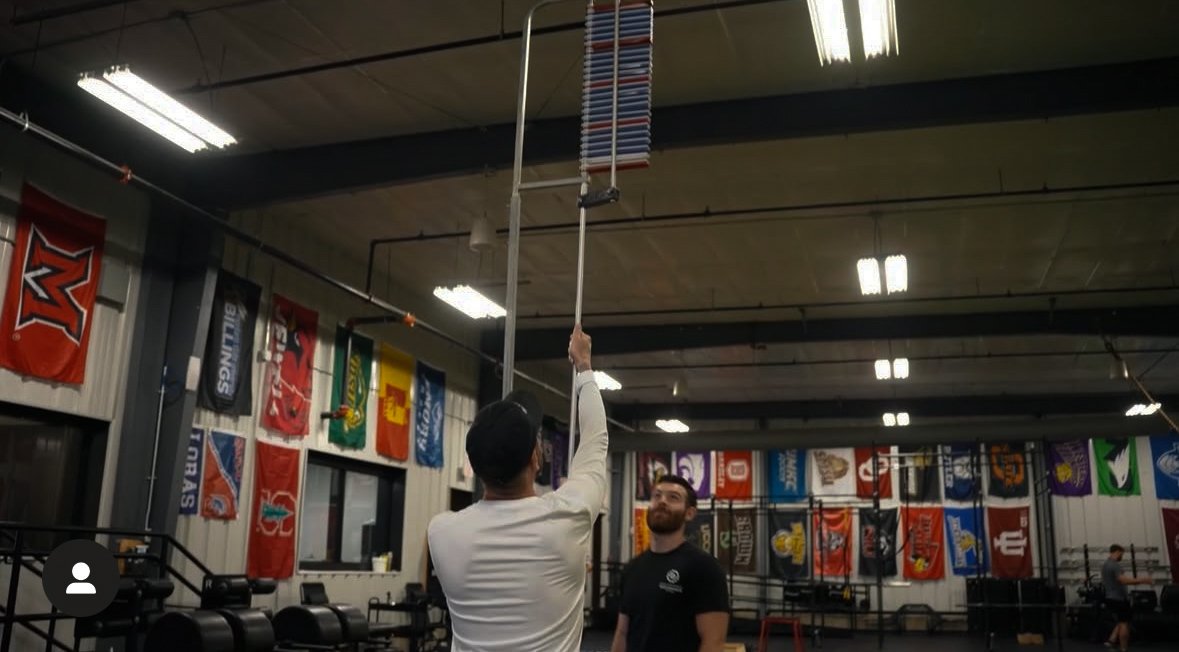
A vertical jump test in a performance gym
02 / The day

Eight contact hours.
More than half of them lab.

Lecture sets up each skill, then you do it on a partner and get checked off. Breaks and lunch are not counted toward contact hours.

8:00–8:45Module 1 · LectureThe post-operative knee: graft biology and healing timelines (ACLR, MPFL, meniscus, TKA); arthrogenic muscle inhibition and why the quadriceps stays offline
8:45–9:30Module 2 · LectureScreening for BFR: absolute and relative contraindications; PE symptom screen; Padua, Caprini and Wells and where each came from; documentation
9:30–10:00Lab 1Risk-screening case lab: screen standardized post-op cases end to end and document them
10:00–10:15Break
10:15–11:00Module 3 · LectureBFR mechanism and dosing: limb occlusion pressure and its determinants; 40 to 80 percent LOP; 20 to 30 percent 1RM; 30-15-15-15; the safety literature
11:00–11:45Lab 2 · Check-offLOP measurement and cuff application: individual check-off, upper and lower extremity
11:45–12:30Lunch
12:30–1:15Module 4 · LectureEarly phase, weeks 0 to 6: effusion, extension, quadriceps activation; NMES with BFR; parallel workstreams rather than serial milestones
1:15–2:00Lab 3Early-phase loading lab: BFR set execution, autoregulation by RPE and repetition loss, session construction on healing-tissue constraints
2:00–2:45Module 5 · LectureMid-rehab progressive loading: from BFR to heavy load; program design; tempo and range progressions; the next-morning response
2:45–3:00Break
3:00–3:30Lab 4Program-build lab: construct a phase-appropriate week for a standardized case and defend the dosing
3:30–4:15Module 6 · LectureCriteria-based return: strength normalized to body mass, limits of limb symmetry indexes, hop and jump testing, fast stretch-shortening-cycle work and sprint exposure
4:15–4:45Lab 5Testing lab: administer and interpret strength and hop/jump batteries; make the call
4:45–5:15Module 7 · AssessmentDocumentation and case synthesis; written post-test and skills check-off review
Included

The course day, the slides and summary sheets in your portal account, a certificate of completion with the contact hours, and your CEU record.

CEU credit

Whether the hours count depends on your profession and your state. We tell you where it counts before you register, and give you what you need to self-report where that is allowed.

Bring

Clothes you can train in. Cuffs, pumps and equipment are provided. No BFR experience is needed.

Changes

Transfer your seat to another person or date, or cancel, at no charge up to 14 days before. The full terms.

03 / Dates and registration

Pick a date.
Register in two minutes.

Every course runs at a host clinic or facility. Registration is handled by Stripe; you get a confirmation from us and a receipt from them.

$450 a seat · all materials included

No dates scheduled yet.
New dates and cities are posted here first. Ask to be told when one opens, or bring the course to your facility.
Host It

Registering for someone else, or several seats? Email joey@sidelinemethod.com.